7 July 2019

Help! What happens when I decide I don't want to go into a degree-related career?


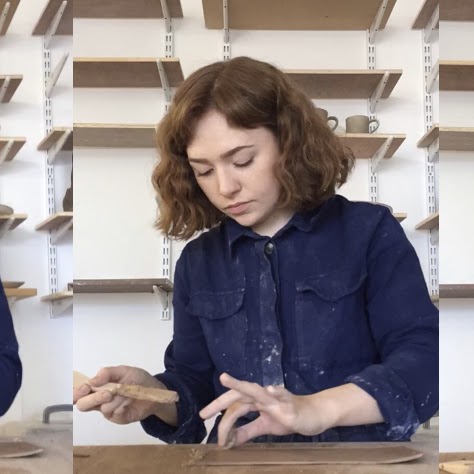
Ellie O'Connell, a psychology graduate, decided after landing a degree-related career that working within the field of psychology wasn't for her. Ellie then decided to take another path and now works successfully as an investment graduate associate at an independent financial adviser. Below she talks about how that felt, what her next steps were after her realisation, and what advice she'd offer to someone who finds themselves in the same shoes after graduation. 

1) How were you preparing to graduate - did you have a plan for your next steps?

I always had the idea that I would complete my undergraduate degree, and then go on to complete a Masters and then a PhD but by the time my third year rolled around I was desperate to leave further education, move back home to Manchester and begin my 'adult' life. In the lead up to the end of university and graduation, I was so stressed out about my final exams and my dissertation that I wasn't thinking about what was next. 

2) Did you have any worries about graduating - if so, what were they?

My only main worry about leaving university initially was finding a job. I was excited to move back home, and be close to my family and friends again. The transition was a lot harder than I anticipated though. I went from living with my friends and being around people all of the time to suddenly living with just my mum and being unemployed meaning that I was alone a lot. 

3) What was your experience like searching for jobs once you had your degree?

Once I had moved home, I went back to work at the local pub and just started scouring Indeed and Reed etc to find any sort of job that had something to do with psychology - but that you didn't need a Masters/ PhD for. I didn't know what I wanted to do, or what my ideal career path was. Searching for a job was a long process, with lots of rejection! I applied for a lot of jobs and didn't get an interview for 3 months. In the end, I only got one interview but luckily I was successful!

4) When did you realise you didn’t want to use your degree directly for your
career?

There wasn't really a point at which I decided I didn't want to use my degree, I just knew I had to change jobs and wanted something that had a lot less pressure involved. The first job I got after university was a Support Worker for young women who had autism, learning disabilities and depression. I found the role really challenging emotionally as if I did anything wrong, it could seriously impact the lives and wellbeing of the women in my care. It was beginning to really affect me so I resigned and worked in retail for a bit. I'm not saying retail isn't hard, but I found the change exactly what I needed. I came to the realisation that for the time being I wanted to do something that was still challenging, but the consequences of getting things wrong were less severe. At that time, I felt like that excluded a lot of psychology based roles.

5) What sort of feelings/thoughts came with that realisation?

The only feeling I really had when I came to that realisation was relief. 

6) What were your next steps then, realising psychology wasn’t for you?

I started to look for any job in any field that would accept someone without relevant experience and I felt like I had so many more options. It was still a struggle to find a non-retail role but I was enjoying myself where I was so I just felt a lot more relaxed.

7) What has been the most exciting part of leaving university and education
behind?

Initially, I was just excited to move back to Manchester. Nottingham is great, but I never really felt at home there. I love living near my family, friends and my cat. I feel like I have a much bigger support system here so I'm overall happier being here, which itself is very exciting. But now I have a full-time job I enjoy and have moved out of my family home, I feel very settled.

8) What has been the least exciting/challenging part of being outside of
education?

The least exciting part about leaving university at first was when I realised the transition for both me and my mum from living in different cities to living together again would not be the easiest. We get on really well, but it was a struggle. I had lived independently for 3 years and suddenly felt like that independence was being dragged away from me. The dynamic had definitely changed, but after a couple of months we settled into a new routine and all was well again. 

9) Is there anything about the ‘real world’ you didn’t expect/weren’t prepared for?

The only thing I wasn't prepared for was how difficult the transition from uni would be. I had to develop a new routine which took some time.

10) Is there anything you wish you had been told about leaving university?

1. Some things are going to be a bit harder than anticipated, but you have got to just take it all in your stride! 2. Everybody else is going through a similar thing
3. Do not compare your journey to anyone else's
4. Make sure you take advantage of every opportunity you get! 

11) Three words to describe your transition from university?

 BIG LIFE CHANGE


12) What advice would you offer to someone who was in your shoes - realising they didn’t want to use their degree directly in their career path?

If you feel like you don't want to use your degree, don't! Everything you learnt and experienced will help you even if it is not obvious. You can always go back to it in the future. Your happiness is the most important thing.

23 June 2019

Help! Not ready to say goodbye to education yet - Is a PhD/Masters for me?


If you're currently finding yourself wondering whether to take on a postgraduate degree or not, you may have some questions similar to these below that PhD English Language student, Faye Chambers, can answer:

  1. When is the deadline to decide you want to do a postgraduate degree?
I’m not sure there is any deadline really – different schemes may have restrictions but as long as you have a 2.1 or 1st at undergraduate I think you can start an MA course any time in the future, there is no need to rush into anything. I feel like I rushed into postgraduate studies and that might have been a mistake. To get the free MA by research the deadline was having a start date within 12 months of graduating for undergraduate research, so I deferred for three months and started in the January after I graduated. Because I ended up being rolled onto a PhD scheme the deadline for that was very sudden – I had about a week to turn around a funding application and get onto the course so had no time to really consider the decision.

  1. What kind of funding is available?
The standard government student loans are available for course fees and living expenses, up to 10,000 a year, but you can borrow less if you don’t need it all. The thing to consider with these loans is that you will pay them back alongside your undergraduate loan so may end up with larger payments each month, but that’s only once you are earning above the graduate wage threshold (currently 25000 a year).

  1. Why did you decide to do a postgraduate degree?
Probably for all the wrong reasons! I’m really interested in my subject area [English language] so I think I would have done some postgraduate study eventually, but I don’t think I would have gone straight into it from graduating without the pressure from funding or from lecturers. Our university offered a free masters to students who got a first, but on the condition that you had to start within 1 year of graduating. My grades were really good so I felt I would be wasting an opportunity if I didn’t take the scholarship. The same thing happened with my PhD – I was partway through my masters and PhD funding was offered to me, and my supervisor said she thought I was capable and that it was normally really hard to get funding, so I threw myself into it without really considering why. I am very lucky to have these opportunities but at the same time feel I’ve ended up on a path I wouldn’t necessarily have chosen for myself.

  1. I don’t feel ready to leave uni yet… do you think it would be a good idea to stay in education until I decide on what I want to do?
I think if you enjoy studying and have an idea that interests you for a research project then absolutely. There shouldn’t be so much pressure to have a career goal at the end of what you are doing – learning for your own enjoyment is a great thing to do. But if the only motivation behind staying on at uni is that you don’t know what else you want to do I think it would be really hard to manage, both in terms of passing the course and on your own mental health. There are plenty of ways to spend your twenties if you don’t know what you want to do. Try loads of different jobs out with no pressure and see if you like them. Or do any job at all just to get a bit of money together and use the funds to enrich your life outside of work. Do a bit of travelling. Pick up a new skill you have always wanted to try. I don’t think anybody really knows what they want to do for a career so just do what makes you happiest.

  1. How much academic support do you receive from your university during a postgraduate degree?
There are taught masters with set lessons more like an undergraduate degree, but with research degrees, most of the planning and work is done by yourself. Usually, universities recommend one meeting a month with your supervisor, and then you can email them questions. There are also courses run by the library and postgraduate team each week if you choose to attend, but these are optional and quite general study skills sessions. There isn’t a lot of contact time at all.

  1. Are there many opportunities to get your work published?
Yes, but you don’t need to be a postgraduate to have work published! You will need to turn your research into an article and submit this to a journal in your field. Most journals have online submission guides so you can format your work to match what they are looking for, and they will review it, then come back to you with a decision. I suppose being a postgraduate will help because you will have more practise at academic writing and see work from fellow researchers, but you still have to put the work into your paper separately from your uni work. Also, submissions are judged blind so what matters is the quality of the paper, and not whether you’re an undergrad or a professor. I would say the more common way to showcase your work as a postgrad is conferences. Our department has an annual conference, and the university-wide one is also once a year, plus there will be opportunities for visiting conferences from outside organisations and other unis.

  1. What was it like going from an undergraduate degree to a postgraduate?
The most difficult part is not having strict timetables and deadlines to work towards, whereas undergraduate courses have several modules and you might have work to hand in two or three times a year, postgraduate research is all reliant on one thesis. There are no lecturers asking to see work from you every few weeks so it’s very easy to put off work by going ‘oh I’ll do it next week’, especially when your deadline is three years in the future. Then what happens is before you know it half the time has gone, you’ve wasted it sitting in your pyjamas, and you have 80,000 words to write!

  1. Would I be able to work alongside doing a postgraduate degree?
Universities advise against it but I think you have to, in order to live. Unless you are fortunate enough to get a huge scholarship or have some money to one side, it would be impossible to live independently without working. I think it’s very important to get the balance right – I work 4 days a week which is probably why I’m falling behind on my PhD because I’m so mentally exhausted from working that I have no brainpower left on my days off! If you plan and manage your time well I think it’s possible to do both well though. Also, lots of universities offer teaching work which they will pay postgraduates for, and this is probably a good option for anyone thinking of pursuing an academic career, giving you experience as well as some cash.

  1. What piece of advice would you give to someone who has decided to take on postgraduate study?
I’d say if you have decided on studying at postgraduate level, organise yourself and manage your time well. Set mini-goals or deadlines which are achievable so you don’t feel like you’re struggling in a huge void. But I think you need to ask yourself one question before you start; if I could do absolutely anything in the world, and money and circumstances were no object, would it be this postgraduate degree? If the answer is no then you should probably weigh up why you are taking on this huge amount of stress and work for yourself!


16 June 2019

Meet: Libby - Graphic Design graduate (BA)

Self-portrait illustrated by Libby

Hello. Bonjour. Greetings to my fellow members of the graduated-and-now-what club (and those soon to join). Firstly let me start by saying that it took me far longer than I care to admit to formulate that initial sentence, and I haven’t written anything “properly”, apart from the odd cover letter, since my dissertation which I submitted in July 2017. So there we are. Maybe bear this in mind when reading what I am about to haphazardly scramble together and subsequently let my friend Rebecca publish to her wonderful brainchild that is One Oh One magazine.
“Who is this rambling creature I am subjecting my brain cells to?” I hear you ask. Well, my name is Libby, I am 23 years old, and I got my bachelors degree in Graphic Design from The University of Huddersfield in November 2017.  And what a long, hard slog it was too. The best three years of your life, my bum. Although I do recognise that those words do indeed ring true for many, allowing many to gain independence and carve out an identity away from parents, and allowing for a chance to explore new environments and subjects et cetera, but for me, much to my sadness, my time at university was not so great. I was plagued with self-doubt, extreme anxiety, physical and mental health issues, unhelpful tutors, course uncertainties, a flatmate whose degree may well have been in how to get away with stealing and making communal kitchens a hazardous waste zone, loneliness, the list could go on – but I’m not here to spread misery and woe you shall be grateful to learn, but to appraise you all with gallant and fanciful tales* of my life post graduation.
*Disclaimer: my life has not been gallant or fanciful in the slightest since leaving university but please read on nonetheless.
Graduating from university was a weird one. A mixed-up mixed bag of feelings, if you will. For all the reasons mentioned above, a big part of me was elated to be free from the place that had caused me so much misery and I felt like a new beginning could be just what I needed to focus on getting back to myself and would allow me space to -as corny as it sounds- ‘heal’, find enjoyment in my hobbies again and centre my energy on becoming mentally well, while moving back home and being surrounded by my family. On the other hand, however, graduation signalled a very clear End to my whole life’s identity as a student. I love to learn, and up until university had generally thrived in an academic setting and put all my self-worth into good academic results, so this was a hard pill to swallow (another hard pill to swallow: No more student discount). An existential crisis was on the cards, but as I’d already been having one for about three years, this one didn’t hit too hard. I did struggle though most of the following year after graduating - beating myself up about not already having secured a job (if only I’d done a placement year!) wondering why I didn’t enjoy university (was it me, my over-thinking brain, my course, my tutors? I’m still unsure) feeling sad I didn’t get a First Class degree (Hello Perfectionism!) and just generally feeling a bit lost and disappointed in myself. Inspirational Instagram quotes became my best friend: “When you’re in a dark place you tend to think of yourself as being buried. Perhaps you’ve been planted. Bloom.” Feel free to scorn.  If any of this is sounding familiar to your situation, then you have my sympathies, but also perhaps slightly selfishly I’m glad not to be the only one having felt this way.
I am yet to Bloom I feel, but for all my negative feelings, I am starting to feel more positive about my life post-graduation. I had my first proper job interview last year, and it went well – not so well I got the job – but I did get positive feedback from the people who interviewed me, and as someone with an anxiety disorder that requires medication, this was a Big Deal. I’ve started to draw frequently again and found the confidence to share my work online through Instagram, which has been met with a positive response. I feel lucky not to have a family that are constantly pressurising me to get a job, even though it would help them a lot financially, but who understand for the most part and realise that I’m trying my best, and doing things in my own time. I’ve regained a mental clarity of sorts and for the first time in a while actually feel like I may be capable of achieving my goals and living the life I’d like to live.  
Things that are helping with this uncertain phase of my life are: Knowing it won’t be like this forever, speaking with friends I made at University (the best thing to come out of my time there!) and realising everyone is on their own path and feels a bit unsure, re-connecting with old friends, engaging in things that I enjoy, going for long walks, working on improving all aspects of myself – oh, and feeding my desire for gleaning knowledge by learning French on Duolingo (r.i.p my 399 day streak, Feb/2019).

It’s a struggle, but I know I’ll get where I want to be in my own time, and so will you.   

3 June 2019

Transitioning out of university: what does the research say?


When I (Rebecca) began my MSc research into the transition out of education as part of my psychology degree, the first step was to sift through the existing literature. What I found was, the transitional literature exploring transitions up until the point of entering university existed in abundance. However, there was quite a limited understanding as to what happens during the transition out of education. Nonetheless, the literature, though limited, was still there. So, what is it saying?

First of all, you need to understand what a transition is defined as within academia. Although there is not one absolute definition, a transition is widely understood to be broken down into three stages. The 'Ending' stage - where people say goodbye to their familiar roles and environments, the 'Neutral Zone' - where people find themselves in a limbo of identities/roles and can experience uncertainty, and the 'New Beginning' - where people begin to embrace the change and new opportunities (Bridges, 1980). Our transitions through educational institutes can be challenging in themselves for many reasons, but if we look at how our identity is affected by these transitions, we haven't really had to worry about adapting to a new identity/role because we've had plenty of practice in being a learner/student. We know the drill by now, what is expected of us, what we can expect as a student/learner. When we transition into university, however, it gets a bit more tricky. Because for those of us who move out of the family home, roles begin to co-exist. We are not only expected to uphold our student role, but we are now expected to be independent 'adults' (although my research found that most people struggle to identify as adults during university and feel in an identity limbo - more on that in a future post).

Interestingly, for those of us who move back home with family after university - this identity limbo can appear once more. My own research findings suggested that this return into the family home, for some, makes people feel as though they have lost their independence, and have 'reverted' back to childhood, living under parents' roofs etc. This comes as no surprise when research suggests that transitional markers such as being self-sufficient and independent predict whether individuals feel like adults/as though they have made a successful transition from university (Johnson et al., 2007). Lifestage research highlights how emerging adults (18-25) (Arnett, 2004) face pressures of 'normative transitions' (Bell & Lee, 2008) such as becoming employed, and 'non-normative' transitions such as moving back into the parental home after independence (Bell & Lee, 2008).

Researchers such as Furstenberg, Rumbaut and Settersten (2005) rightly suggest that the road to adulthood can no longer be marked by the achievement of a full-time career as graduates are now finding themselves facing greater instability and movement within the workplace. Researchers such as Kwok (2018) argue therefore that is important that this uncertainty must be explored within the career planning of emerging adults. From my own research and the research of others, it is super important that when we are planning to graduate from university, we are not looking at the world through rose-tinted glasses. A degree, unfortunately, does not guarantee us smooth sailing into the working world. If you are reading this and you have not yet graduated, my advice would be to book a careers appointment at your student union (or within your school), explore your options. Even if you have no clue what you want to do, use the resources available to you at that time and speak to someone who can help you narrow down your interests. I still have no idea what I want to do career-wise (although I do have some vague ideas), but I have learnt that that's okay. Once I got over the worry I was going to waste my degree (you never can or will, a degree is still valuable, even if for personal growth), I realised that even if it takes me 10 years to find a career that's right for me, I'm in no rush. I am hoping that by having people share their graduate experiences on One Oh One, it can sieve out some of those unrealistic expectations we may hold, or others may project onto us, towards life outside of education, and ensure that people are coming to this transition with their blinders off and full vision of what is to come. I don't mean to insinuate that everyone struggles with making the transition and that everyone has unrealistic expectations, but we may not have been as prepared as we had liked for making the transition in some shape or form.

If you have moved back home with your parents/family members after graduating and are struggling to feel independent/like an adult, have a chat with your parents/family members about how you're feeling. I struggled for so long with having to move back home and felt as though I had gone back to being a child. But it's important for me - whilst living with my mum - that I have my boundaries. I'll make sure I have plans to see friends over the weekend, or I'll have some evenings where I stay in my room (because my mum needs her space too!) and I keep in the back of my mind that despite the fact that I am 23 and have lived independently for three years, I'm still my mum's baby in her eyes... so I do occasionally have to eye-roll when my mum says 'don't go to bed too late', but I know it's because she cares, not because she wants me to feel like a child. But ensure you have that freedom and have the space to feel like the adult you are!

I will be sure to share my research findings in more detail soon, especially in terms of what direction the literature needs to take and what needs to be done to help graduates make the transition out of university successfully. If you want any more information about my research and its findings, drop me an email: oneohonemag@gmail.com and I'd love to hear from you!

Follow my blog with Bloglovin

References:

Arnett, J.J. (2004). Emerging adulthood: The winding road from the late teens through the twenties. New York, NY: Oxford University Press.

Bell, S. & Lee, C. (2008). Transitions in Emerging Adulthood and Stress among Young Australian Women. Journal of Behavioral Medicine, 15 (1), 280-288. doi: 10.1080/10705500802365482.

Bridges, W. (1980). Making Sense of Life's Changes. London: Nicholas Brealey Publishing Ltd.

Furstenberg, F. F., Jr., Rumbaut, R. C., & Settersten, R. A., Jr. (2005). On the Frontier of Adulthood: Emerging Themes and New Directions. In R. A. Settersten, Jr., F. F. Furstenberg, Jr., & R. G. Rumbaut (Eds.), The John D. and Catherine T. MacArthur foundation series on mental health and development. Research network on transitions to adulthood and public policy). On the frontier of adulthood: Theory, research, and public policy (pp. 3-25). Chicago, IL, US: University of Chicago Press.

Johnson, M.K., Berg, J.A., & Sirotzki, T. (2007). Differentiation in Self-Perceived Adulthood: Extending the Confluence Model of Subjective Age Identity. Social Psychology Quarterly, 70(3), 243-261. doi: 10.1177/019027250707000304.

Kwok, C.Y.N. (2018). Managing uncertainty in the career development of emerging adults: Implications for undergraduate students. Australian Journal of Career Development, 27 (3), 137-149. doi: 10.1177/1038416217744216.


26 May 2019

Meet: Hanna - English Literature (soon-to-be) graduate


Hello readers of One Oh One! My name is Hanna and I am currently pending a degree in English, literature and graduating in July from Leeds Beckett University. I am currently still living in my student house in Leeds, with plans to move to London next month... and have no idea what job I'm going to be working two months from today! My life is in major limbo right now, but... first, how did I end up where I am?

Since a young age, I am grateful that my parents have always allowed me a free reign over my own educational decisions, teaching me that the subjects I enjoy are those worth taking on. Therefore, my subjects of choice have always mirrored my interests, rather than reflecting one specific career path. Like many, I went to uni because, well, what else was I supposed to do... become an adult at 18?! I saw university as an opportunity to grow as a person, and this is absolutely what I have experienced over the past three years. My interest in literature has ballooned and my love for language and writing has grown massively. I wrote a ten-thousand-word dissertation as a product of my degree, and within it, I explored the ways that contemporary literature engages with nature. Reading specifically in terms of ecological concern in an age of climate catastrophe and extreme human pollution, I concluded that it has become necessary for literature to engage with nature in this way. I believe that literature surrounding environmental concern can broaden our activism for the planet, and writing this dissertation inspired me to begin writing nature-centred poetry myself, with an undertone always on the beauty of natural phenomena that might soon be completely lost. I look forward to sharing with you my own creative work.

So... what now? As I mentioned earlier, I will be moving down to London next month to live in a house with friends and my boyfriend. I have absolutely NO idea what life has in store for me, but I don't mind (that is, not yet I don't...) I am excited for such a bold move down south (havin' lived all me life up int'north) and I am looking forward to sharing this move with those of you who might be considering a crazy-postgraduate-change-of-environment!

Attempting to hold little expectations of what the near future might hold, my rough 'plan' over the next few months is to:

1) Get Han down to London. In one piece, desirably.
2) Find ANY job (or three) that will cover rent.
3) Build up a portfolio of freelance and creative work. I will do this in my spare time and hope to gain success in the world of freelance, as well as, of course, for a couple of extra bucks.

That's about it for now! I am glad to be sharing with you all at One Oh One the struggles and pleasures that I will no doubt find myself tangled in in London, and hope that my reckless life-choices can bring some calm to those of you who might be panicking. For now, however, I will sign off and continue living off the dregs of my student loan, and make the most of not having a job yet...!

Follow my blog with Bloglovin