23 July 2020

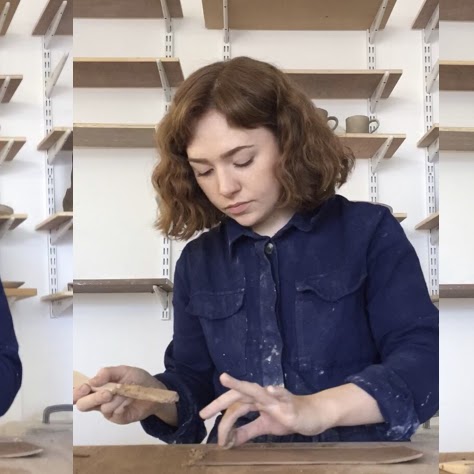
Meet: Jo - Photography (BA) and Psychology (MSc) graduate

Website: https://www.jcphoto.co.uk/
Instagram: https://www.instagram.com/jochukualim_photo/
Twitter: https://twitter.com/Jo_Chukualim

I’m Jo. I’m 24 and I graduated in 2019 with an MSc in Psychology. Before that, I graduated in 2018 with a BA in Photography.


What has it been like for you, leaving behind university? 

It’s been interesting. I went on to study an MSc once I’d finished my BA degree and then there was this extra layer to my career to figure out. i.e. what does the integration of both my degrees look like in a job? So I ended up on a picture desk at a charity, photographing mental health projects.


Did you have a plan for your life after graduation?

I definitely had plans for my life after graduation. Like everyone else I wanted a stable job where I could be creative and use the skills I’d worked so hard to develop. The problem with university is that it doesn’t explicitly prepare you for life afterwards. I was lucky enough to go to one of the best photography programs in the UK, certainly the best in London at the time but knowing how to navigate the job market was not something that was taught. Even with the difficulties I’ve had, I feel like one of the lucky ones because I started this job navigation thing way before I started my degree. However, without connections, it was still tough.

Funnily enough, everyone talks about the importance of networking but doesn’t really tell you how to do it. Unless you’re super extroverted and feed off talking to many people at once, it’s probably going to take a bit of figuring out.


When did you begin taking photographs?

I started taking photos properly just before A-levels and this was at London College of Fashion on a short course. I didn’t love the course itself but it showed me what I wanted to do for the rest of my life.


To you, what makes a good photograph? 

Technically? Good use of light and shadows to create an image with depth. I also need to feel something. I mean it’s incredibly subjective because something that evokes an emotional response from me can mean absolutely nothing to someone else.

Someone pointed out that I tend to shoot people in a vulnerable and somewhat sensual way so I guess those are the kind of images I’m drawn to. If I had to dissect it (with my psychology brain :P), I’d say I was creating images with emotions I didn’t feel safe to explore in the past and felt the only way I could do so was through photography.


What do you enjoy most about the process? 

Connecting with different people. That’s what image-making does for me, it allows me to connect with people I might otherwise not have met or spoken to.


Do you have any particular goals you want to reach in your life outside of education?

A solo exhibition. This was actually set to happen last summer. I had a date, a venue and I’d started printing and planning but I underestimated the toll my masters would take both emotionally and financially. So this is something I’m still looking forward to.


Do you have any goals with your photography? 

At the moment, a solo exhibition is the only thing on my mind and trying to figure out the best way to make that happen. I haven’t created a new project since I left Uni but there’s a lot of work that I’ve done in the past but haven’t shown yet and, looking at them together, I can see that they are all connected.


What is one thing you wish you knew about the ‘real world’ whilst you were still at university? 

That my race and gender would make things harder for me. I thought that my skills and hard work alone would be enough to get me through, that’s how I was raised. I guess I figured the art world was more progressive than it was. The amount of racist and sexist treatment I’ve been on the receiving end of has been shocking. I would have approached the ‘real world’ differently had I known.

Any tips for surviving outside the university bubble? 

Creating a network, especially while you’re at Uni, is important. If you’re like me the word ‘networking’ can seem daunting and a bit confusing but really it’s about finding people who enjoy the same things you do and/or people who think in the same way. So your friends and course mates! They form part of your network. I mean it’s kind of like dating isn’t it? The advice people usually give when you’re looking for someone special is to go to events, exhibitions, or just places that you enjoy and not be afraid to interact with others there. I’ve actually found it easier building a network during lockdown because there’s been a surge in online communities being set up so the awkward dance that happens in person is taken away.

Finding connections is one thing but making those connections work for you is another. Tell people your ideas and share your plans for your career. It might not turn into something immediately but they also have a network and could know someone to help point you in the right direction.

To keep up to date with our posts:

Follow my blog with Bloglovin

3 July 2020

Graduating in a pandemic - Meet: Erin - English (soon-to-be) graduate (BA)


I’m Erin. I’m twenty-two years old and am about to graduate with a BA in English from Queen Mary University of London. 

1) How have you been spending your time during lockdown?

At first, I was still working on my final essays and dissertation, so was spending around 30 hours a week just planning, writing and editing essays. However, around the time I finished my dissertation, I was offered a job at a local grocery store, so began working there for most of my week! Other than that, I’ve been making my way through years of Netflix recommendations and learning Spanish.

2) How are you feeling about graduating in the middle of this pandemic?
Pretty scared about the possible impact, to be honest. As I’m graduating with an English degree, there is no secure career waiting for me in the outside world. It scares me that certain sectors will most likely be unable to hire for a while, especially since I have been interested in a career in the arts sector or NGO sector for years now, and both have been very badly hit by the pandemic. But, I’m trying to see the positives! Mainly that everyone is in the same boat, and hopefully, once the pandemic finally draws to a close, there will be an influx of jobs in sectors that had to shut down throughout it.

3) Has the current situation impacted any next steps you had planned?
If so, how have you coped with that?
Massively. I had planned to travel to Mexico for an unpaid internship in June, just two weeks after my original dissertation deadline. As a part of the internship, I was going to be working as a journalist with an environmental charity. I had hopes that I could be looking to start my career as soon as I returned in September.

Again, I’ve just tried to look at the positive side. The company I was meant to be working with have been amazing, allowing me to postpone the trip to any later date. I have been able to save a lot more money than I would have been able to simply by working as normal up until June, which means I will be able to travel after the trip, something I wouldn’t have been able to afford otherwise. Additionally, by the time I finally make it there, I will hopefully be able to actually speak Spanish, rather than just order a burger.

4) How have you tried to manage the uncertainty I imagine this has left a lot of 2020 graduates with?

I think the only thing you can do is speak to fellow graduates and remind yourself you’re not alone. I have so many friends graduating from a whole variety of degrees who have been forced to change their plans for the near future. Many are planning to stay in part time roles that have no connection to their career plans, a few have been forced to defer or postpone masters courses, a few have completely lost job opportunities. I even have a couple non-British friends that have been forced to return to their home countries and have no idea when they’ll be able to safely return. Knowing that most of my friends are equally as uncertain about where they might be in six months is the main way I can comfort myself. Also, I’m just making the most of time off. I haven’t had this much spare time since I was nineteen years old, so I’m trying to adapt to not guilting myself for spending an entire day off watching Netflix and sewing!

5) Have you been given any specific guidance by your university?

Unfortunately, no. Although that seems to be the case for most of my friends attending different universities. I think students have been left in the lurch a little during this pandemic. My university was particularly unhelpful throughout the final semester, refused furlough to myself and 250+ of student staff, failed to release grades on time, etc. Since my last deadline, we’ve hardly been sent a thing, but at this stage I don’t expect anything less.

6) What plans do you have now?

After waiting for two months to see whether I might make it out to Mexico later this summer/year, I decided I didn’t want to continue with the uncertainty and began looking for graduate roles nearby my hometown. In September, I will now be starting work as an English teaching assistant in a Manchester secondary school. Whilst this isn’t something I ever had planned, I’m grateful I will get the opportunity to gain some experience in schools (as I have considered teaching in the past), and that I will be working solely within a subject that I love dearly. Hopefully, by the time the school year is complete in 2021, I will be able to head out to Mexico just a year later than planned! After that, I have no idea. But I figure that if there is anything that the last few months has taught me, its that plans can change and opportunities can arise within the space of weeks, so there is little use in getting bogged down about where I might be in twelve months’ time.

Follow my blog with Bloglovin

28 June 2020

How to: survive living with your parents


Moving back in with your parents after living independently during university I’d say is the most difficult part of the transition… (of course, finding a job is pretty damn hard, especially in these current corona times). Moving back to my childhood home for me was incredibly hard. Before moving to university, I had always doubted my ability to live independently, being the definition of a home bird, I expected it to be hell. But they were the BEST years of my entire life. Before university, I’d never really been away from my mum for longer than a week - struggling (yes, even as an adult) with separation anxiety whenever I was away from her.

What surprised me most was the fact I never once (genuinely!) experienced homesickness, this was possibly helped by the fact I had moved out with one of my best friends who started at the same university as me on the same degree course. In that time, I grew so much as a person, I learnt so much about myself - outside of my family’s influence (because we’ve always been so close and have lived together on the same estate all my life). I learnt my own beliefs, my own likes, my own dislikes, my own ways of viewing and reacting to things. I had a blast. Any time I returned home for a week or more, whilst it was nice to see my family - I was desperate to return to my space, my place of growth. Summers were always a struggle. In my final year, I kind of dreaded the fact I’d be moving back home for an indefinite amount of time (not having the funds to live independently).

I moved out of my childhood home as exactly that, a child, young and naive at 18. I left, an adult, my own person, at 21. The moment I stepped back in that door with three years of my life packed up and ready to unpack in a space that no longer connected with me, I was 18 again. My family hadn’t spent a lot of time with the person I had become at university, they saw me briefly for summers, christmas and some weekends, but they didn’t see the Rebecca I was away from them - who managed her own bills, worked alongside her degree, did her own weekly food shops, budgeted, drank with friends at the weekend, wrote for the student magazine, they didn’t see that I wasn’t the person I left.

I moved back home in July 2017 and am still at home to this day… and it’s been tough. And lockdown has only made it tougher - having to work from home and having barely any opportunities to escape. I have felt myself become more and more like the 18-year old I left behind.

I wanted to share some tips that have helped me navigate and survive the big move.

1) Establish your boundaries with your parent(s), remind them that you are a full-grown adult - just like them! Yes, you are still their child, but you are not a child. Boundaries could look like refusing to be told when to go to bed (yep, I’m still often told ‘don’t go to bed too late!), asking them to respect your privacy - knocking on your door rather than coming in uninvited. And just establishing some me-time where you’re not mithered.

2) If you are financially able to - pay your parents some rent, work out what is an acceptable amount. This has helped me to feel a little more independent - knowing that I am part of the upkeep of the house, rather than relying on my parents to pay for bills and food shopping.

3) Have open and honest conversations with them - if you’re feeling suffocated by them, or you’re feeling they’re not respecting your boundaries or the fact you are a whole ass adult, tell them. You are able to have adult conversations. Try your hardest not to revert back to a teenager in these moments aka ‘you’re sooo unfair, you don’t understand me!!! Life is soooo not fair’... leave that behind, the more you’re acting like a teenager, the easier it is for them to treat you like one - and the cycle continues.

4) Get. out. the. house. Go for a walk, have some time alone, meet your friends (of course, sticking to government guidelines in these times). Have something you do outside of the house that is for you and you alone.

5) Find ways to help around the house - become a housemate rather than the child. Would you have let your uni housemate cook tea for you every night, iron your clothes, wash your clothes, wake you up, change your bedding etc., nope, so don’t let your parent(s) do this. Yeah, it’s easier, but again, it’ll only reinforce the child-parent relationship, do your own goddamn ironing!

Living with your parent(s) whilst it might be tough, it’s also a real privilege and it’s important to acknowledge that. Some people aren’t that lucky. I am incredibly grateful that my mum allowed me to move back in, and isn't pushing me or rushing me to move, rather giving me the time to get everything in order before I flee the nest a second time. And don’t forget, it’s also equally as important to remember your parent(s) had those three years without you, they may have changed as well! They aren’t used to having you back around the house, so the more you work together on the move going smoothly, the easier it’s gonna be. Give your parents their own space, too. Don’t be disrespectful, respect their boundaries and any rules of their house. And you’ll survive it.

7 June 2020

Meet: Sarah - Politics graduate (BA)

Insta: @sarahlostctrl / @identitypartyshop
Depop: https://www.depop.com/identityparty/


What degree did you graduate with and what year did you graduate?


I graduated with a politics BA from goldsmiths in 2018!

Has your experience of the ‘real world’ so far been positive or negative? 

It’s definitely been positive, I loved my degree but it was nice to get out of education after studying for so long and being totally in control of my time!


When did you first start selling clothes on Depop?
What was your motivation to start doing this? 

I first started selling clothes on depop in my first year of uni (2015), just old things I had to get a bit of extra cash! Then in my second year (2017) I set up my shop, I found 2 really beautiful dresses in a charity shop that weren’t really my style but I couldn’t leave behind so I put them on my depop and they sold in a few days... I loved finding cute clothes that had been discarded and giving them a new life with people who would treasure them so it slowly became my job!

How long has it taken for you to get the store following you have? 

I gained 20k followers in the first few months and since then it’s grown steadily to 85k!


What’s been the best thing about running your own little business? 

The best thing is definitely getting messages from people saying that my store has made them start buying second hand as opposed to new... I love the creative side of sourcing clothes but I also really want to transform the market and give people an accessible online platform that’s an alternative to fast fashion.


How have you coped with keeping your store going in these times of COVID-19? 

I’ve had to change things a little due to the virus, I’ve moved all my sourcing to online and cut down my posting to once a week. I’m a business customer with royal mail anyway so I’m able to drop off all my parcels so that cuts down contact which is good! I’m incredibly lucky that my business is online so I’ve still been able to keep it going with some alterations for safety!

When you were in university, is this where you would have expected to be? 

Definitely not, I always planned on going into more mainstream fashion and interned throughout my degree. As my shop grew I realised it would be viable to do it full time and I’m so passionate about it I decided to give it a go!


What advice would you give to someone who is going to be graduating in the summer? 

My advice would be not to worry that you need to come out of uni and go straight into your “career”- it can be really daunting but actually you don’t need to find a job for life because you can gain experience and build on what you’re doing. Do something you care about and enjoy
and see where it goes!


4 June 2020

Postgraduate education: is it worth it...What do postgraduates say?


I don't feel ready to leave uni yet… do you think it would be a good idea to stay in education until I decide on what I want to do?

1) Personally, I do feel as though I stayed on with postgraduate education because I wasn't ready for the 'real world'... But I think that it hasn't really done me any problems, as I was able to work alongside completing my MSc. I don't see it as an issue, but only if you use that time wisely. Plan for what you're going to do after your postgrad, try and find work experience, use the careers service, because it will be over before you know it!

2) No, university is expensive, if you could get it funded and defer for a year that would be great. You could then spend a year in a job, volunteering, etc. And figure out what you actually want to do. If you just stay in uni, you'll not grow, you'll not suddenly figure out what you want to do, because you're only getting exposed to that course, to that course setting. Get out there, get a 'crap' job, travel, see friends, make connections with other people not just students and uni staff.

3) Hmm, it may be a good idea to stay on, but having experience in different places and opportunities may help you decide and then your further studies will be more fruitful.

I don’t really like my undergraduate degree - can I choose a different postgraduate degree?

1) Yes! I think certain courses and universities will require different entry requirements, but I do think it's possible to specialise in an area completely away from your undergraduate degree. You may be able to take a conversion course etc., but as far as I'm aware, you can apply for most postgrad degrees coming from a different undergrad.

2) Yes, if you've decided that it's not for you why would you want to spend 3 years doing something to then have to spend 3 years correcting it. Leave, figure out what you want to do and come back if that's the way forward for you

3) Do you know what it is you don’t like? Is it the subject, the teaching, the other students or what? Of course, you can stop onto something else at postgraduate level, or do another first degree or even diploma to widen your field.

Is a post-graduate degree harder than an undergraduate degree?

1) I think the independent aspect of it, yes. I did a research masters so it all felt totally different to the constant support I received at my undergraduate. And despite the fact I'd only started my MSc in the September after graduation, I found it a LOT harder when it came to writing my thesis, to write in that academic style that had previously come so easy for me. Once I got back into the swing of it, it was absolutely fine, but yeah, you do need to prepare for the increased independent work.

2) I definitely think it is- much more isolating than an undergraduate degree - especially if it's your own research

3) Masters, no. Its usually the same layout as an undergrad and its familiarly comforting, the work can be slightly harder, but that expected, but the experience isn't much different. PhD however is lonely, its an entirely new setting, you're in charge of yourself to a degree you haven't been previously, it's hard to keep yourself motivated and because there isn't really actual hand in dates is sometimes feels like you're behind all the time, the work is definitely harder but the context sometimes is harder than imagined

4) Yes and no. You are more your own boss in postgrad studies, so that might suit you.

What can I expect in terms of tutor support whilst I’m doing a postgraduate degree?

1) The support is definitely less intense as an undergraduate degree - especially for me, doing a research MSc and moving away from campus. You normally have a monthly meet-up with your thesis supervisors, and they will give you a list of things to do before your next meeting. Living away from campus, and working full-time, it was harder for me to access that support from my supervisor, but emails and phone calls are always an option. I think you're expected to be more independent when it comes to postgrad, but your supervisor will always be there for support with write-up and data collection, etc.,

2) Again, masters is pretty similar to undergrad. PhD is a whole new realm, make sure you have a good relationship with your supervisor, you get an hour a month and a lot of the time it feels like that isn't enough to cover the work, nevermind any of the common mental health issues associated with doing the PhD. 

3) I’ve had really good support, but in the past poor support from tutors, so it depends where you go to study, and what the tutors interests are. Plus your willingness to ask for help.

Can a postgraduate degree give me a better chance of entering into my field of interest after I graduate?

1) I think so, yes. Especially if you use the time to network, through postgraduate conferences, and events held at your university. It becomes a more level playing field when you get to postgrad, and there's less of a gap between yourselves and your supervisors/lecturers. Utilise any connection you can make, apply for conferences, write for academic journals (websites like the Conversation and Wonkhe), and gain as much relevant experience as you can during that time.

2) No and yes, it really depends on what job you want after. They always come in handy, so I'd say go for it but you also need to make sure you try to get experience in your field, volunteer, get a lower position, show up and make connections if you're in a highly competitive area. Maybe do a gap year to get it

My uni has offered me funding to do a postgraduate degree, but I don’t really want to - shall I just do it to not waste the funding?

1) It is amazing when your university offers you funding, as it happened with me. However, make sure you think it through. Yes, it's a great opportunity, and you may feel pressured not to waste that chance, but there's really no point in you putting yourself through more intense years of study if you don't even want to do it! Weigh it up, would a postgrad propel you further to where you want to be, or hold you back?

2) I would take any opportunity you can - if you're passionate about your research, there should be no question about it

3) Defer the position. You can usually do it for 2 years, get out there get a job, be normal for a bit and it's there waiting for you while you decide. I got funding for my PhD and jumped in as I didn't want to lose such a good opportunity, it went horrendously wrong, I didn't like the subject I was given, the supervisor was awful, and it was just a mess. I quit and deferred my place for 2 years and came back with a new passion restored in an area I'd never thought about before and its so much better this time round. Use the offer as a safety net, keep it on pause while you do something else, you never know 2 years later you might want it, and if you don't that's OK too, but at least you've had time to think so you're not being rushed into a decision you're not sure of. 

4) Who would you be doing it for? And why? You’d waste the money and your time if you did it.

Would I be able to work alongside doing a postgraduate degree?

1) I did, but it wasn't really great for my mental health, especially because I was working full-time in quite a demanding job, and writing up my thesis. I think only you can decide on that, really. You know your financial situation/your ability to balance commitments. I wouldn't, however, recommend working full-time, as it really did cause me a lot of stress and anxiety.

2) Yes for both masters and PhD. It would suck if you had to work full time, you won't have much of a life... And while doing the PhD that is something you shouldn't compromise, master you have your class and your mates, the PhD is lonelier. I had to drop a shift at work to be able to have time that was for me 35 hours at uni and 37 at work was slowly killing me, I did it for a year but then I noticed my mental health was... Well crap. So I dropped a shift and it's been much better, I can see family and friends and not miss out on theirs and my own life events because I can balance things a bit better. 28 hours or less I feel is doable, but it's what you feel you can do...and try to be realistic when planning it... My 4 days at work and 3 15 hour days at uni is doable for me so I have my 1 day and the evenings or morning before and after work to myself. But it does depend on you and your circumstances, and what you're willing to compromise on. 

What piece of advice would you give to someone who has decided to take on postgraduate study?

1) Prepare! Don't get out of the habit of writing academically, especially if you're going to be doing a research degree where you only have one piece of work rather than continual assignments. The end result will always be worth it, even if it's feeling hard. A postgrad degree is a great way of researching something of interest to you, and it is incredibly satisfying to watch it all come together. Enjoy it, there's a lot more freedom involved, which does mean a lot more discipline to be in place. Just keep going, 25,000 or 80,000 words seems like a huge mountain to tackle at first compared to your undergrad, so organisation and time-management is key. Don't put things off, a year or three feels like a LONG time, but before you know it, your deadline is staring you in the face

2) Time management, and ensuring you take time to yourself when needed.

3) Keep checking in with yourself, your mental health is important. Make sure you know your "why" going in, when you feel like you can't do it anymore and it's not worth it, go back to it. Remember, changing your mind isn't failing, it's knowing yourself and where you don't want to be, even if you don't know where you're going. Make sure you research your supervisors well, you've got 3 years working with these people, make sure you trust them enough with your life not just your uni life, things happen and you may need to to discuss upsetting things with them (you don't have to like them, but you need to know they're professional and understand that you're not doing it in a bubble). Enjoy it while you can, there are more moments of boredom and stress, remember the good bits. 3 years, seems ages... Its not... Know how you thought that song came out last year and its been 5, that's the PhD, stay on top of it. Plan, plan, plan, and not just your schedule for work and uni, put in time where you can just sit, go for a walk, exercise, see friends. It's very easy to trap yourself in a weird vortex of assignments and work, carve out that time its just as important... Also, go outside.

4) Go for it and enjoy it. Make the most of your time, engage with what might be going on.