16 November 2020

Guest post: Challenges of graduate life and how you can overcome them (Niraj, MORSE (BSc) graduate)


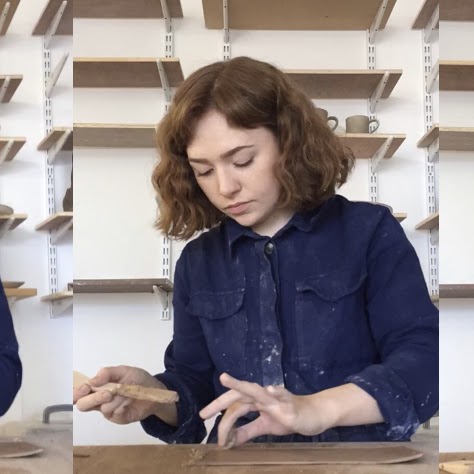
Image source: https://www.instagram.com/analogbynat/


Hi everyone my name is Niraj and I am so excited to be writing for Rebecca’s blog today! To say a bit about myself, I graduated from Warwick University this year, having studied MORSE (Mathematics, Operational Research, Statistics and Economics). I have just started a graduate scheme at an actuarial consultancy. Post-graduate life can be tough, whether you enjoyed your time at university or not. This blog post talks about some of the most challenging things about post-graduate life, and I will also try and give some tips on how you can go about overcoming these challenges.


Maintaining friendships


At university, when you made friends it was often pretty easy to maintain them, as you were fairly nearby to your university friends, and therefore it wasn’t too hard arranging fun things to do with them. However, I found that it was quite hard to maintain all of my university friendships after graduation, and this was for two main reasons. Firstly, a good number of my university friends don’t live near me, so even if there was no pandemic, it would still require effort to arrange a face to face catch up. I live in London, but I have friends that live in places such as Norwich, Birmingham, and Wales. I also have university friends that don’t live in the UK! The second reason is that we are all busy with full-time jobs, as well as other responsibilities. Therefore, any catch-up, whether it is over a video call or face to face would have to be planned around that, and this has proved tricky in a lot of cases. I actually wrote a separate blog post on the challenge of maintaining friendships, which can be found here.


It is hard not to be able to see and interact with your university friends as much as you used to, and it’s perfectly ok to feel sad about this. However, one tip I would give that helped me is to plan and schedule catch-ups in advance, rather than rely on spontaneous plans. As I currently work a full-time job, I tend to use the weekdays to schedule weekend plans with friends. Having advance notice of when I am meeting or even video calling friends allows me to plan things around that. 


Adapting to a different lifestyle


I feel that the lifestyle at university is very specific and unique to university life and that things do change after graduation. For a lot of students that I know, this change has proved tricky. Some have felt a loss of freedom and independence by going back to their family home. Others thrived with having a daily routine at university, and now they are struggling to deal with the lack of routine after graduation. I appreciate that every university student has had their own experience when it has come to leaving the university lifestyle and adapting to a new one. Personally, I have found this to be the hardest part of leaving university, and something that was a shock to the system after 4 years at university.


The best piece of advice I would give here is to use this change as an opportunity to do things you wouldn’t have done at university. I do understand that this is easier said than done, however, it is not impossible. When I finished university, I met up with school friends, started blogging again, and started reading. All of these are fun but things I didn’t really have time to do at university. I also started my new job which I really enjoy. Reframing your mind to think about the opportunities that come with the post-university lifestyle helps you with having a positive mindset, which is great for wellbeing. 


Comparing yourself with others – This is a big one. It’s very easy for me to say how you shouldn’t compare yourself with others. However, with technology and social media being a massive part of our lives, most of us inevitably fall into the comparison trap. Comparison with others is a particularly big issue after graduation. You may be struggling to find a job, and then reading posts on LinkedIn or Facebook about your friends getting their dream jobs can make you feel down. This is because you can end up comparing yourself to your friends that have jobs, and feel behind as a result. You are all amazing people in your own unique way, and sometimes social media and comparison can make it hard to recognise this. Furthermore, comparing yourself to others can be detrimental to your mental health and wellbeing.


In terms of advice, I am not going to say that you shouldn’t compare yourself to others, as this is easier said than done, and even I do it from time to time. However, what I would say is the things that people tell you or share on social media is never the full story. People generally only share the good things that have happened in their lives, but everyone is fighting a battle you don’t know about. Therefore, even the people that seem to have it all figured out will have things that are not so good in their lives.


I hope this blog post helps and that you are all keeping well. Post-graduation can be a tough time, and it is so important to prioritise your mental health and wellbeing. Remember that there is support out there, and I am always happy to talk to you on nirajshah2003@gmail if you feel that you are struggling.  


Read more of Niraj's posts: https://niraj.home.blog/


14 November 2020

Meet: Kate - History (BA) graduate


After recently publishing an article for Student Minds on the Power of Graduates Coming Together, I connected with Kate, History BA (Hons) graduate from the class of 2019 at The University of Newcastle. I chatted to Kate about her experience of graduating below. 

Kate also published a piece on Student Minds titled Embracing A Challenge: How to Enjoy The Unknown. Kate discusses how to embrace the challenges that university throws at you - and a lot of her advice can be tailored to life outside of university, with one of her tips being 'Say No to Self-sabotage'. I definitely recommend you give it a read! 
________________________________________

1) How were you preparing to graduate – did you have a plan for your next steps?


My final year at Newcastle University was my favourite by far. It was full of constant essay writing (and research for my looming dissertation deadline!), weekly volunteering on Newcastle Student Radio and socializing with friends. Although it was all great fun, in hindsight, I always had the idea of travelling as my next step, which helped me get through those 9am lectures and 5,000 word essay deadlines!

I always felt like I was on a treadmill from sixth form to graduation, so going travelling was the release I wanted from education. After consistently saving money every month I booked a flight to Vietnam during a dissertation crisis in the library - as you do! I think this gave me a bit of willpower to push through my two final semesters and make the most of the limited time I had left as a student. 


2) What was your experience like searching for jobs once you had your degree?


Once I got home from Vietnam, I began my job search. It was a little stressful! I still had the travel bug, yet I was conscious that I needed to get the ball rolling on the job front. Whilst I volunteered at a local hospital radio station in my spare time, I was lucky enough to be offered a paid runners position at a television production company for a month or so before Christmas 2019. This was perfect as it allowed me to gain some valuable experience and put some money aside for my trip to Australia in January 2020. 


However, when I returned from Down Under, Covid19 really threw a spanner into the works – something that we are all still living through!  Few industries are recruiting at the moment and the job search, for not just graduates, has temporarily halted. Covid has put my voluntary position at a local radio station on hold due to social distancing measures, so I am staying productive during the interim by working part time as a sales assistant and childminder. For the most part, I feel Covid19 has been a bit of a blessing and a curse. It has made me realise how I was most probably guilty of living a tad in the future and not so much in the present.


In an ideal world, I’d love to pursue a career in radio production or journalism. I feel, especially in broadcast media, your job is like a portfolio whereby you’re involved in lots of different projects often at the same time. I think this can be attributed to when you enter this industry and apply for a job too – there's often no direct route, which can be incredibly disheartening. 


3) Did you have any worries about graduating – if so, what were they?


I wasn’t so worried about graduating, but more so, rather excited that I had accomplished such a personal goal of mine to read History at university. The fact that both ‘the end’ was in close sight and that I would never be able to replicate my university years was an extremely weird prospect for me. The idea of ‘adulting’ and finding ‘the job’ made me slightly terrified upon graduating – it still does, argh! 


4) What has been the most exciting part of leaving university and education behind?


At times I’m guilty of getting wrapped up in the rat race of searching for a job, the concept of making the most of my twenties and finding out who I am as a person, but the idea that ‘the world is your oyster’ (cliché, I know!) is so exciting to me. Albeit part time, the fact I’m earning every month is empowering. I can save money during this lull and make arrangements for big financial commitments in the future.


5) What has been the least exciting/challenging part of being outside of education? 


I think the least exciting part of being outside of education is that....really, life isn’t any different. I was naively expecting a crescendo moment, but essentially, I still feel like I’m the same person. I don’t think I’ve changed in my motivation to achieve certain personal goals, but life away from what was my old life (sob!) can annoyingly be a little mundane and routine driven. 


6) Is there anything about the ‘real world’ you didn’t expect/weren’t prepared for?


One word: Lockdown. I was nowhere near prepared for what was ahead of me when I returned from Australia – nobody was, for that matter! Life has now become so uncertain and the circumstances make it so difficult to plan ahead. The one thing I’ve learned working under these current circumstances is that no matter what you are doing and where you are working, learning to adapt to a new environment and taking every day as it comes is so important. Find the excitement in the unknown – at least that’s what I’m trying to tell myself!


7) Do you have any particular goals you want to reach in your life outside of education?


To have a purpose and feel wanted. In the broader context, as cringe as it sounds, I want to be happy and content within my future work environment. Everything has a domino effect on each other. 


8) Is there anything you wish you had been told about leaving university?


Truth be told: the transition is scary...and nobody tells you. It’s such a taboo subject. Your life doesn’t all click into place as soon as you drive back home after three years or so away ‘doing your own thing’. Learning ‘how to adult’ is tricky. I don’t think you ever really know what you’re doing, no matter what stage you are in life. Everybody is in the same boat, and more so now, the same storm! Be kind to yourself. 


9) Three words to describe your transition from university?


Daunting. Fun. Exciting.


10) Any tips for surviving outside the university bubble? 


Despite my limited time outside of the ‘bubble’ (coming up to a year and a half!), I would stress don’t be afraid to show people that you are eager to learn. One of my biggest qualms is that job descriptions for junior positions often include ‘experience necessary'. This can make you feel so frustrated, as a recent graduate like myself, doesn’t always have this requirement. Willingness to take up unpaid jobs could help you gain similar experience, which could prove valuable in the future. Remember, take every day at your own pace and listen to your gut instinct if something doesn’t feel right. You never know, something new could lead you onto the right path – and add another string to your bow!


3 November 2020

The Power of Graduates Coming Together


*Taken from my recent post for Student Minds: The Power of Graduates Coming Together*


Coming out of university is pretty scary. There are so many expectations (from yourself and others), so many comparisons to make to other graduates, and so many obstacles to overcome. I remember when I finished my undergraduate degree in 2017, I couldn’t focus on my success, I could only focus on the fact I was having to move back to my family home, and I hadn’t yet secured a ‘grad role’, in fact, I had no idea what I wanted to do. This to me was one big fat failure in trying to be the adult I was now expected to be. My mental health really took a turn for the worst. 


Not knowing what I wanted to do, I jumped at the chance of going into a funded research degree. That sweet relief of two more years to hide away from the real world and all its responsibilities. I decided to research the transition out of university into the ‘real world’ - for obvious reasons. I wanted to see if I was alone in my feelings of utter dread and uncertainty. 


I interviewed 20 different graduates from different degree backgrounds. I spoke to them about their experiences in university, how they did/didn’t prepare for making the transition, how they had found their transition so far - positive and negative, and what they wish they had known. I found talking to other graduates both fascinating and comforting. It was difficult to keep myself separate and away from my research, and difficult to not turn around and be like ‘I FEEL THE SAME!!’ when people validated my own concerns/anxieties. For example, my interviewees reported feeling they had returned to being a child when they moved back home with parents. They struggled to handle job rejections - thinking they’re degree would have secured them roles, they faced job stigma (i.e. ‘when are you going to get a ‘proper job’?) and all in all, feeling a little lost and vulnerable without the university bubble. I asked graduates how they managed to cope with all these feelings of uncertainty and all of the difficulties they faced, the vast majority of interviewees disclosed feeling some comfort in knowing others’ were ‘in the same boat’. 


In university, it’s easy to feel part of a community. There’s no comfort like being in the library late at night rushing to finish an assignment and looking around to see other students doing the same, fuelled by caffeine and stress. There’s no comfort like moaning to your course mates about student finance, or about referencing and word counts. You can all relate to each other, some way or another. And you’re all on the same path, with the same goal. Work hard to finish university and get your degree. It’s when you get out of university when it all gets a bit messy. 


With my mental health taking a hit, feeling lost and those well-documented ‘graduate blues, I set up One Oh One. A place to share my graduate experience, to interview other graduates, and share advice/tips for surviving the real world and for looking after your mental health. My platform is not the only one existing out there, only further highlighting the need for graduates to feel connected, and to reach out for the advice and support we often lack once leaving behind education. There are platforms out there that are set up to share CV writing tips - offering free consultancies - platforms to support graduates in the events agency, platforms to support and highlight the achievements of female graduates, and BAME graduates. There are platforms to support graduate mental health, job searching, and just general advice. Once you graduate university, the support network and student community you have been used to for all your years in education, completely vanishes. 


Communities like mine, and the others which are cropping up feel like one big peer support group - a bunch of graduates trying to survive for the first time without their support bubbles, and clinging together in a world that is often unrelenting to those fresh from university. Where the university support ends, graduates are pulling together to keep it going. You can feel so alone when you come out of university, you can feel like you’re falling behind (though there is no race), you can feel like the world wants you to fail. It can really impact on your mental health, as it did mine. It is so refreshing to be able to connect with so many different graduates, to hear their advice, to see the realities of the real world, and most importantly, to feel less alone.


Some other great articles on Student Minds you may like: 

Uncertainty Amidst Covid-19

Imposter Syndrome


12 October 2020

Guest post: Erin - English Graduate (BA), 'Imposter Syndrome: What is it, and how do we overcome it?'

Image source: instagram.com/emmatterbury


Imposter syndrome is something most people will experience in their lifetime - whether in their working life or personal life. Our guest blogger, Erin, a recent English (BA) graduate, sums up beautifully how it feels to enter the working world whilst battling feelings of imposter syndrome, and shares how she's found ways to handle it. 

Erin has previously written for One Oh One about her experience of graduating in the middle of the ongoing COVID-19 pandemic. You can read that here. 

______ 


Having recently begun my first post-graduate job, the last few weeks have been filled with huge learning moments. However, two weeks ago, when sitting in a meeting with my line manager, I had perhaps the biggest one of them all. ‘Try not to compare yourself to (insert name of much older colleague here). She’s been doing this for years, and you’ve just begun, in the middle of a pandemic, no less.’ He told me after I expressed my worries that I wasn’t as capable of working as independently as she was. It was then and there that I realised, I was beating myself up for not being an expert in a role that I’d been in for a month, allowing myself to worry that I wasn’t intelligent enough, experienced enough, or good enough to do a job that I had, actually, been coping incredibly well with. 


In the world of psychology, this feeling has been termed ‘imposter syndrome’. Essentially, it’s the feeling that you don’t belong within a workspace, the feeling that your achievements are the result of chance and luck, and the feeling that you don’t deserve the recognition you’re receiving. If you find yourself feeling like you might have tricked your employers into believing in you, that you shouldn’t be placing such a high value upon your work or that you are undeserving of a break because ‘well, I don’t work that hard anyway’, then you might be suffering from imposter syndrome. But why could this be?


Research has suggested that graduates in particular are significantly more likely to experience this feeling. In school – and even in university – we are constantly provided with proof of our achievements, be it in the form of grades, feedback from teachers and professors, awards, etc. Within such an environment, it’s easy to pinpoint the areas in which you’ve done well, and where you might need to improve. However, as soon we leave the education bubble, we are forced into a world where the only person judging our work may be, at times, ourselves. At this stage, it may become increasingly difficult to see yourself as a valued member of your team, especially when you aren’t receiving personally tailored feedback for every task you complete. This can be even more true for those belonging to groups whose competence in certain fields is often brought into question. Women and ethnic minorities – I’m looking at you. 


Ultimately, it’s important to remember that whilst these feelings are completely normal, they’re most definitely holding you back. Here are some simple steps that I have taken to curtail that familiar wave of self-doubt: 


  • Remembering that I’m not alone. It may not seem like it, but your co-workers, your managers, the people in the media that you look up to? they’ve all experienced this feeling before. Having a look at people you admire and reminding yourself that they have also felt like an imposter at some point can sometimes be enough to rid yourself of the insecurity. It can also be helpful to share these thoughts with colleagues if you feel comfortable doing so. Rest assured, they will probably remind you of all the reasons that you do belong in your role. 

  • Stopping the comparison. This isn’t school anymore; you and your colleagues didn’t all take the same maths test with easily comparable results. Without a doubt, there will be nobody around you at work with an identical history, facing identical challenges. Therefore, comparison is your worst enemy! Instead, try to own your personal accomplishments (no matter how small). Was today the first day you didn’t have to get your line-manager to check a draft before you sent it? That’s an accomplishment, so celebrate it!

  • Not allowing the self-doubt to impact my decisions. Whilst it may be impossible to avoid that nagging feeling of ‘I’m a fraud!’ when you come across a task you simply can’t complete, it is possible to ensure that you don’t allow that doubt to stop you from taking action. Remember, asking for help doesn’t make you any less deserving of your role. 

  • Lastly, reminding myself how far I’ve already come. At eighteen years old, I remember thinking that the idea of writing a dissertation was so terrifying that I would never complete a degree. There was probably a day when you, too, didn’t think you were capable enough to finish something, let alone do well. Making a list of all the things you have achieved, rather than focusing on what you haven’t, is a sure-fire way to stop feeling like you’ve failed.


3 August 2020

Help! Handling job interview anxiety


Job interviews at the best of times are nerve-wracking experiences, everyone will experience anxiety to some degree - that’s totally normal. Of course, this can be amplified if you struggle with your anxiety on a day-to-day basis! 

I have always hated job interviews, I remember my very first interview for a sales assistant position at 16, god, I was so nervous, I didn’t eat for 24 hours. Safe to say, I absolutely flunked it, and got the call the same day to tell me I had been unsuccessful (brutal). I vowed to never go to a job interview again, feeling totally ashamed I couldn’t answer their question of, ‘where in the store is best to display our new handheld fan collection, and should we put the batteries next to the display or away?’ 

But of course, you can’t avoid job interviews, unfortunately, you just have to learn how to handle them!

Until I was 22, most of my job interviews were for part-time roles in stores or cafes, my first big interview was for an Educational Support Assistant role at a local sixth form college. Getting that interview was definitely a ‘right place at the right time’ sort of situation, after inquiring about work experience and being told they had a vacancy if I was interested. I’d gone in to speak, unofficially, with the SENCo of the college to ask more about the role, and knew straight away that I definitely wanted to apply. She pretty much told me on that day that she’d be up for hiring me, but we had to go through the official route of applying/interviewing, ‘there will only be 3 people on the interview panel!’ yeah, 3 people too many to my anxious brain! I really thought I would have gotten away with not having an interview, after explaining how I often struggled with anxiety, she was incredibly understanding and reassured me that she would be there, and she’d fight my corner. 

Going into that interview, yes I was nervous, but also felt some comfort knowing that I’d already impressed ⅓ of the panel, and just had to do the same with the others. The whole interview, I could feel my throat closing in, I was shaking, but I got through it and I received a call the same day to say I had been successful RESULT! I worked there from 2018 to the start of this year. 

The last time I had an interview was for my current role at a university. I hadn’t been sure at the time whether I wanted to attend, because I loved the job that I was in - I had been applying at a time where I was interested to see what other opportunities were out there with my experience, not expecting any results. Anyway, I received an invite to attend an interview, and at that point, I wanted nothing more than to avoid the whole situation and stay in the comfort of my familiar role. I was so close to saying no, feeling sick at the prospect of having to go and sit opposite a panel of people asking me questions I might not be able to answer (*flashbacks to the handheld fan*). But, I figured, my anxiety and clear desire to steer clear of interviews was just definite proof I needed more experience. And plus, I was interested in hearing more about the role I had applied for. 

I spent the time before my interviewing researching the role, pulling apart the job description to write about how my current experiences and skills matched up to the job role, and I tried to imagine the sort of questions they would ask me. As you expect, the usual suspects ‘tell me about a time you have successfully handled conflict’, ‘what are your strengths/weaknesses’? As had happened in my very first interview, I didn’t eat anything the day before - god bless physical symptoms of anxiety, and couldn’t face any sort of food/drink the morning of. I had planned my route, I would drive to work, park up, spend an hour in work answering emails, meeting students, and then walk across for my interview.

I spent that morning at work crying in the toilets for pure fear of going to the interview, for fear of being offered the job, and needing to decide what to do. I remember my colleagues having to hype me up to leave, reminding me how I would smash it and that they were proud of me. I spent the walk to the interview trying to hype myself up. It failed miserably, as I sat directly outside the building I was supposed to interview in having a HUGE panic attack. Despite the fact I was incredibly embarrassed to be having this experience in public, worrying the people interviewing me would see me, I was paralysed by anxiety and couldn’t move. At that point, I wanted to admit defeat, I couldn’t go in. 

I sat there for about 5 minutes, trying to calm myself down. And perhaps the strongest inside voice I had ever heard, appeared out of nowhere and said ‘Nope, you’re not doing this to me anymore. You’re not winning’. And just like that, I stood up, wiped my tears, hoped my make-up hadn’t smudged too much, took a deep breath, and walked into the building. I had NEVER felt that strong and determined, and there was no fight back from my anxious voice, it was like I had taken it by surprise! To this day, I can’t believe how quickly I was able to pick myself up.

As soon as the interview began, my anxiety began to dissipate, it didn’t disappear completely and there were times where I couldn’t answer a question and I wanted the ground to swallow me, but I survived. And all the while I couldn’t believe my strength. I felt like saying to the panel, I was a broken mess outside just 2 minutes ago, and look at me go!!! As I’ve already made clear, I did get the role! And to this day, I am immensely proud of myself, because I could so easily have left that day and missed out on this opportunity. 

SO after all this - what tips do I have for handling your anxiety in a job interview?

- Prepare, not just the night before! Sit with the job description, try to apply your experience and skills to explain why you could meet the expectations/specification. 

- Know where your interview is taking place, sort out your route ahead of time, and give yourself plenty of time, you don’t want to be rushing!

- Before going into the interview, take deep breaths.

- Avoid caffeine before your interview, if you already struggle with interview nerves, adding caffeine will amplify all the physical symptoms and can make it difficult for you to relax

- Research the company, if they ask you why you want to work for them - can you highlight parts of the company values which match with yours? 

- It’s okay to not understand a question, ask if they can rephrase. If you still don’t understand what they mean when they’re asking where they should place the handheld fans, hold your hands-up, admit defeat, and explain you are unable to answer. You could say: ‘I’m really sorry, I am unable to answer that question right now, am I able to come back to this at the end of the interview?’ This can buy you some time to think, or you could say ‘I’m sorry, I am unable to provide you an answer to that question’. You’re only human, not everyone has the answer to everything, we’re not Alexa.

- If you know you fidget a lot, try and take something with you to make it less obvious you are fidgeting, wear a ring that you can play with under the table, or find something discrete to take with you to channel that fidgeting. 

- Maintain eye contact, as scary as it seems - don’t look at the table.

- If they offer you water, take it - if you feel your throat drying up, or you feel yourself becoming particularly anxious, take a sip. 

- It’s okay if you don’t have any questions when they ask, but I would always try and have some banked… Perhaps you could ask what a typical day is like in the office, what they enjoy about working for the company? What sort of opportunities for progression are available? If you’re really at a blank, explain you don’t have any questions at that time, but you would be able to email anything to the relevant people should anything come up. 

- Treat any job interview - no matter how much you want the role - as purely experience, the more pressure you put on yourself to succeed, the more your interview will come across staged and intense, try and relax, of course, you’re aiming for the best outcome, but don’t pressure yourself.

After the interview, take some time to recollect. Don’t be diving straight into any taxing tasks. Reward yourself in some way, remind yourself how proud you are of yourself! Whilst you’re waiting for your result, try not to overthink it. If you get the job - celebrate!! If you are unsuccessful, don’t be too hard on yourself, you did amazing even going to the interview!

Follow my blog with Bloglovin